

Many procurement teams have a mandate to deploy AI in 2026 and a need to make fast financial returns. AI negotiation seems to be the perfect fit and the value delivered is clear — but (there’s always a but!) three practicalities usually slow us down:
- Identifying where negotiation should happen
- Providing context (i.e. data) to the negotiation agent
- Scaling the results via systems integrations
Here at Nibble, we’re excited about orchestration because it helps solve these problems. If you are deploying software like Zip, Levelpath or Oro, it makes using Nibble much easier and should deliver faster payback.
Problem 1: “I don’t know where I could actually use AI negotiation”
In most organisations, scalable negotiation opportunities are not obvious or easily identified because they’re buried inside renewal requests, RFQs, contract changes and unmanaged tail spend.
That makes AI negotiation feel hard to start. Someone has to manually decide which events are suitable, and we normally advise teams to identify around 100 opportunities to get going.
Orchestration solves this upstream.
When buying activity is routed through a single intake layer, the platform can ask a consistent set of questions. What is being bought? Is this a renewal? Have volumes increased recently? Are suppliers asking for above-inflation price increases? Are there alternative suppliers? Are payment terms sub-optimal? Do we already have a standard contract and e-signatures in place?
From there, simple rules can be applied. Not everything should be negotiated autonomously but many things should! And most of the time there is little downside to trying. In fact, one of the biggest opportunities we see is developing a culture of negotiation. Less asking why something should be negotiated, and more asking why shouldn’t we negotiate?
When this becomes the base case, expectations start to shift. Not just inside your own organisation, but in your relationships with suppliers too — they begin to expect that offering best value is part of doing business with you.
Orchestration allows these decisions to be made systematically, rather than relying on someone noticing an opportunity at the right moment. Too often, contractual terms — often hard-won during the initial negotiation — are only revisited when something goes wrong, rather than proactively revisited when conditions change or value could be improved.
Problem 2: “AI Negotiation needs context — and our data is fragmented”
A negotiation agent needs data and information to outperform. The better the data, the better the negotiation.
To do its job well, it needs to understand historical spend, prior outcomes, standard payment terms, benchmarks, and what the specific sourcing event is trying to achieve. In reality, that information is usually scattered across multiple systems.
With orchestration in place, a single integration can give the negotiation agent access to multiple sources of context.
The result is simpler and more robust. Nibble receives a richer, structured picture of what is being negotiated and why, without needing to know where every individual data point originally lived.
Problem 3: “This won’t scale — the integration effort will kill it”
Even when teams get a pilot working, scaling AI negotiation relies on embedding it deeply into your processes, both for initiating each new negotiation and for operationalising the outcome through contracts and downstream processes.
Once negotiation is embedded as a step in an orchestrated workflow, scaling looks very different. The same rules, triggers and handoffs apply whether there are ten negotiations or ten thousand. New use cases are enabled by changing policy and routing logic, not by rebuilding integrations.
What this means in practice for autonomous negotiation
An AI negotiation agent like Nibble focuses on doing one thing well: talking to suppliers and running the negotiation itself. Orchestration, meanwhile, is the workflow that determines when negotiation should happen, what context is passed, and where the outcome flows next.
Orchestration doesn’t replace negotiation. And AI negotiation doesn’t replace orchestration.
Orchestration decides what should happen.
Nibble makes the negotiation happen and — dare I say it — delivers tangible, measurable financial value. We don’t just speed up the process; we deliver the gains and the savings (which will help you justify that expensive orchestration tool 😉)
In summary, Orchestration helps solve the three problems that usually stop AI negotiation from getting off the ground: finding the opportunities, supplying the context, and scaling
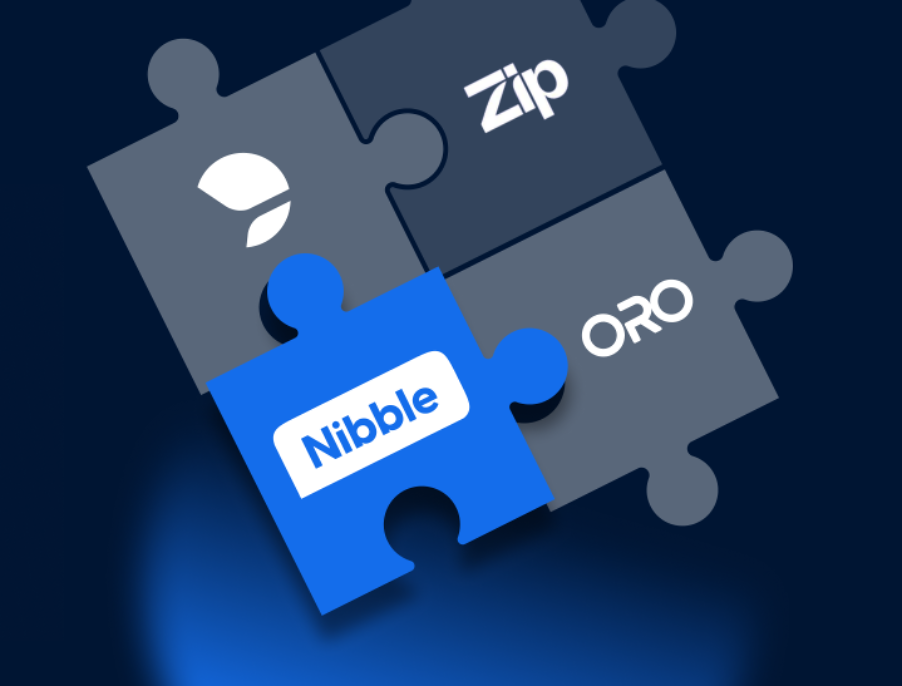
A practical guide: where Nibble’s AI Negotiation fits in an orchestration flow
Think of orchestration and AI negotiation as doing different jobs in the same process. Orchestration manages flow and AI negotiation creates outcomes.
Here’s how that looks step by step.
The process starts in the orchestration layer. A buying request is raised — a renewal, RFQ, contract change, or sourcing event. Orchestration captures the request and gathers the basic information: category, value, supplier, timing, and whether this is new or repeat business.
Orchestration then applies rules and policies. Based on those rules, it decides what should happen next. Some requests go to sourcing. Some go to legal. Some are approved and passed through. And some are identified as suitable for negotiation.
At this point, orchestration has done its job. It has identified an opportunity and assembled the relevant context.
This is where Nibble takes over.
Orchestration hands the negotiation event to Nibble with structured context. That context typically includes historical spend, prior outcomes, benchmarks, standard terms, policy constraints, and the commercial objective for the event.
Nibble then runs the negotiation. It contacts the supplier, conducts the back-and-forth, makes controlled concessions, escalates if required, and closes an outcome within agreed guardrails. This is the execution phase. It is active, external, and value-creating.
Once the negotiation is complete, Nibble hands the result back. The agreed terms, audit trail, and any exceptions are returned to the orchestration layer. From there, orchestration resumes control of the process. It routes approvals if needed, updates contracts or purchase orders, and supports downstream enforcement such as invoice matching and compliance.
Nibble does not replace orchestration. It slots into it.
Why this matters commercially
Orchestration is essential infrastructure, but it is still a cost. It makes procurement more efficient and more compliant, but it does not directly create value.
AI negotiation changes prices, payment terms, volumes, and risk allocation. It improves outcomes. That means savings, cash-flow improvement, and value capture.
- Orchestration is an operating expense
- AI negotiation is a profit centre!
The reason they work so well together is that orchestration makes AI negotiation easier to deploy, safer to govern, and easier to scale, while AI negotiation is the part of the system that actually delivers ROI 🙂
Why a specialist AI negotiation engine still matters
Most orchestration platforms now talk about “negotiation agents”. That’s not surprising. Once buying activity is centralised, it’s natural to want more automation inside the workflow.
What’s worth being clear about is the role those agents typically play.
In most cases, negotiation agents supplied by orchestration vendors help prepare a negotiation. They surface benchmarks, suggest tactics, draft emails, or highlight where value might exist. That is advisory, not autonomous.
Running a negotiation end-to-end is a different problem. It means managing live, multi-turn conversations with suppliers, making real concessions, deciding when to hold firm, when to escalate, and when to stop. It requires memory, control, and accountability across many interactions, not just good suggestions at the start.
That difference matters more as volume increases.
At low volume, a human can take the insight from an orchestration agent and do the rest themselves. At scale, that breaks down.
Nibble isn’t trying to replace orchestration, and it isn’t trying to be a general-purpose agent builder. It focuses on one thing: executing negotiations safely and repeatedly, within clear constraints, and returning outcomes that can be enforced downstream.
Orchestration decides when negotiation should happen and supplies the context. Nibble does the negotiation itself.
Just One More Thing…
This week’s interesting read is a Procurement Mag profile of how teams are using AI agents inside procurement workflows, featuring a customer of Zip. It’s a useful snapshot of what “agents in the wild” actually look like today.
As Meteb A., Procurement Director at Cribl, puts it: “The first agent we have is the price negotiation agent, which seems to be a hot product.” The article goes on to describe how this agent benchmarks software pricing using historical and third-party data to speed up decisions and quantify savings.
Worth a quick read if you’re thinking about orchestration in practice — and how different agents plug into real procurement processes.
BTW – I would pedantically say this is a negotiation preparation tool and not an autonomous agent, you still need Nibble to actually negotiate the contract on your behalf if you need this workflow to happen 100’s of times and you want to be sure it will negotiate to your rules!
https://procurementmag.com/news/zip-forward-ai-agents-driving-change


